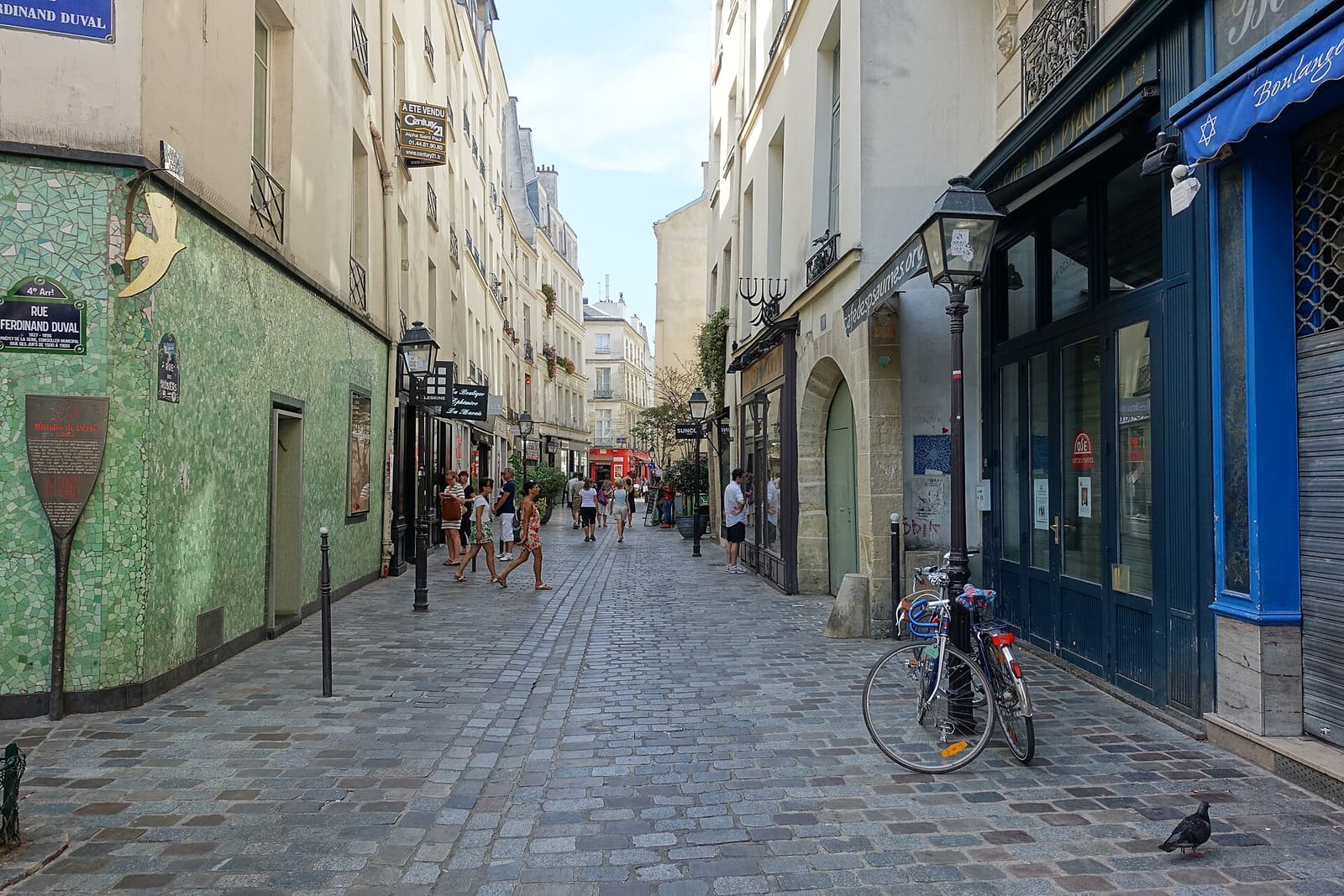
Rue des Rosiers is the spine of the Pletzl — Yiddish for “little place” — the historic Jewish quarter of the Marais. Jews have lived in this part of Paris since the Middle Ages; the modern community took shape with Ashkenazi immigrants from Eastern Europe in the late 19th and early 20th centuries, and was renewed by Sephardic families from North Africa from the 1960s.
The street has changed a great deal — fashion boutiques now sit between the bakeries — but it remains a living neighbourhood with synagogues, kosher shops and restaurants. It also carries painful memories: the round-ups of the Second World War, commemorated by plaques on many school walls, and the 1982 attack on Jo Goldenberg’s restaurant at no. 7.
Top things to do at Rue des Rosiers & the Jewish Quarter
Eat a falafel pitta
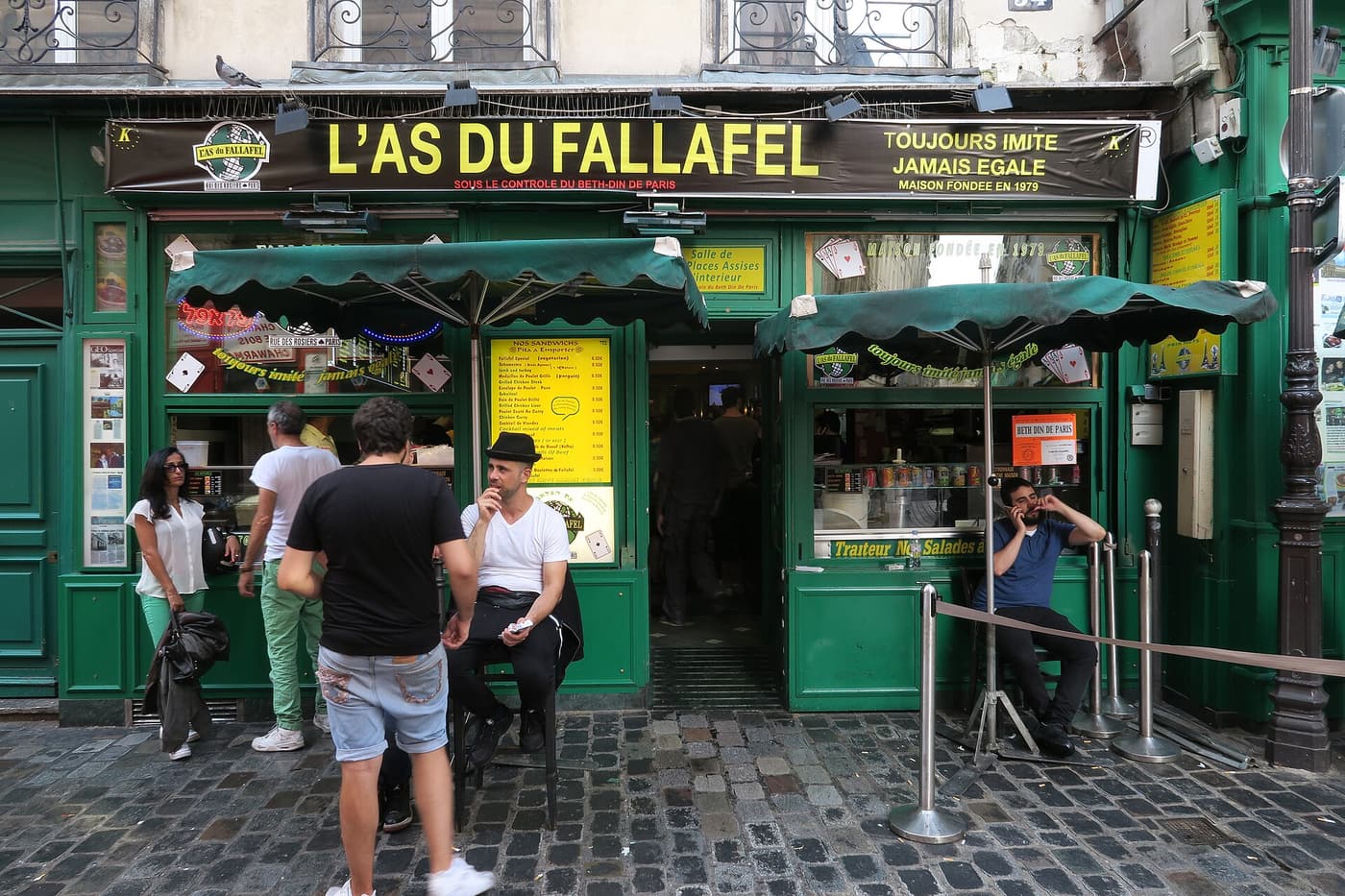
L’As du Fallafel at no. 34 is the most famous address — a stuffed pitta with fried aubergine, cabbage, hummus and tahini. The queue moves fast; takeaway is quicker and cheaper than a table. Other favourites nearby, including Miznon on Rue des Écouffes, are worth comparing.
Visit the Yiddish bakeries
Sacha Finkelsztajn’s yellow-fronted shop and Florence Kahn’s bakery on Rue des Écouffes sell poppy-seed cakes, strudel, cheesecake, bagels and pastrami sandwiches in a tradition going back to Central Europe.
See Guimard’s synagogue
At 10 Rue Pavée, the Agoudas Hakehilos synagogue (1913) was designed by Hector Guimard, the architect of the Art Nouveau Métro entrances. Its narrow, undulating facade is unmistakable.
Find the hidden garden
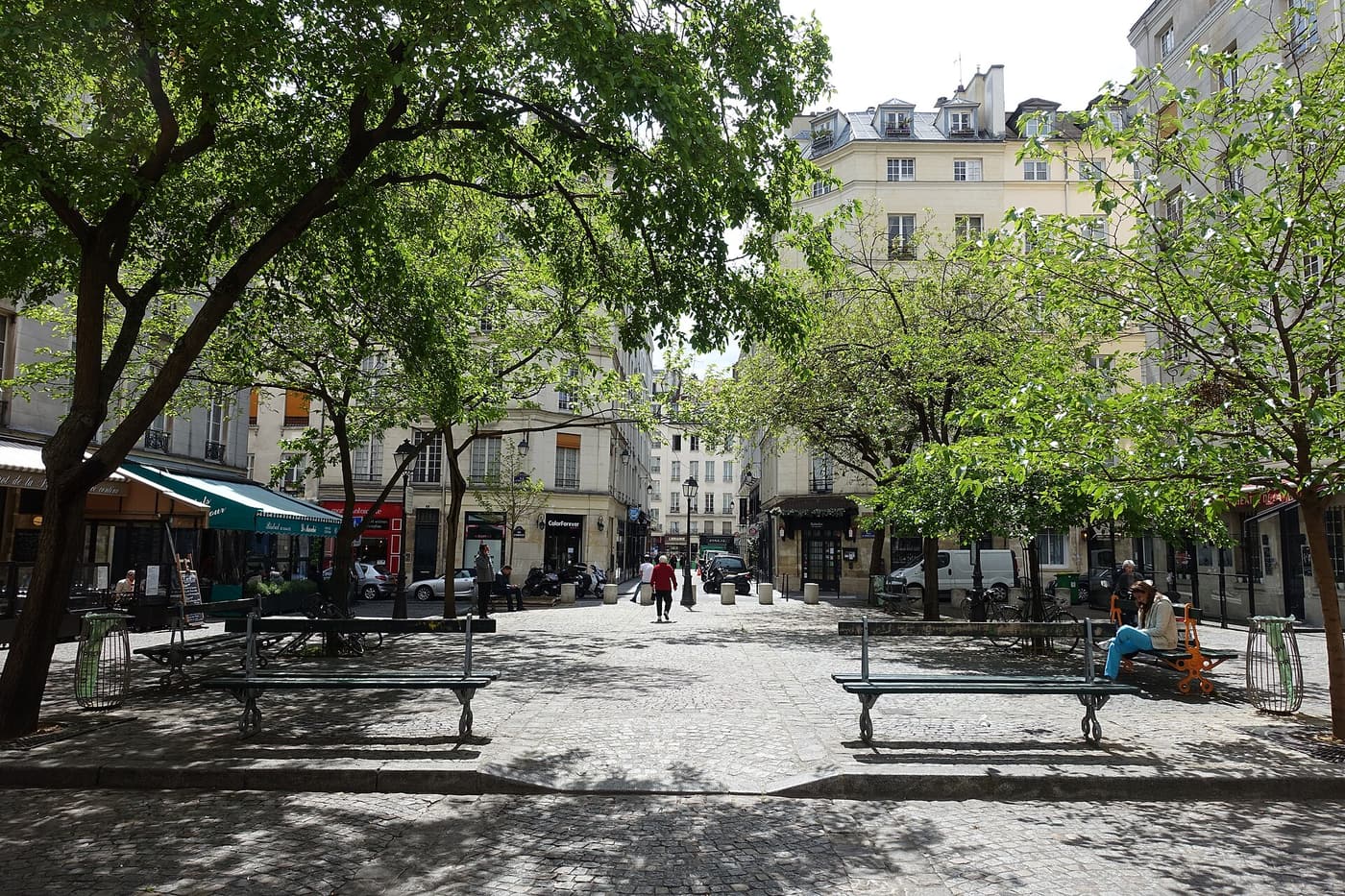
Behind a door at no. 10, the Jardin des Rosiers – Joseph-Migneret links the courtyards of several mansions — a quiet green pocket named after a headmaster who saved Jewish children during the Occupation.
Visit the Mémorial de la Shoah
A ten-minute walk south, on Rue Geoffroy-l’Asnier, the Mémorial de la Shoah is a free museum and memorial with the Wall of Names of the Jews deported from France. The Musée d’art et d’histoire du Judaïsme on Rue du Temple tells the longer story.
How to get to Rue des Rosiers & the Jewish Quarter
- Métro: Saint-Paul (line 1) is about four minutes’ walk via Rue Pavée.
- From the Place des Vosges, walk west along Rue des Francs-Bourgeois and turn left into Rue Pavée — about eight minutes.
Insider tips
- Many Jewish-owned shops and restaurants close from Friday afternoon to Saturday evening for Shabbat — L’As du Fallafel included. Sunday is the liveliest day.
- For a deeper understanding, join a guided Jewish Marais walk with pastry tastings — see our best tours.
- Be patient and respectful near synagogues and schools; security is visible for good reasons.
Best tours & tickets for Rue des Rosiers & the Jewish Quarter
These top-rated experiences pair well with a visit to Rue des Rosiers & the Jewish Quarter:
 Walking tour from €39
Jewish Marais – Yiddish World: Walking Tour and Pastries
A short, focused walk through the historic Jewish quarter around Rue des Rosiers: the immigrant world of the early 20th century, the synagogues, the tragedy of the Second World War and the neighbourhood today — ending with pastries from a Yiddish bakery. Highly rated and very affordable.
- The Pletzl and Rue des Rosiers
- Yiddish culture, synagogues and memory
- Traditional pastries to finish
Food tour from €69 Paris: Le Marais Guided Food Tour with Tastings (No Diet Club)
Three hours of eating your way through the Marais with a local guide — from boulangerie and fromagerie to the falafel and Jewish bakeries of Rue des Rosiers. Rated 4.9 by almost 800 guests, it is the most loved food experience in the district and doubles as a very filling lunch.
- Cheese, charcuterie, pastries and street food
- Family-run shops and bakeries of the Marais
- Stories of the neighbourhood between tastings
 Walking tour from €99
Paris: Le Marais & Montmartre Jewish History Walking Tour
The most in-depth Jewish history tour on offer: three and a half hours covering the Pletzl, the war years and deportation, and the later story of Jewish Paris, extending to Montmartre. Rated 4.8 by around 180 guests.
- The Marais’s Jewish heritage in depth
- The Second World War and the Resistance
- Continues to Montmartre